Crawl space vapor barrier
Below the living space, a crawl space vapor barrier controls ground moisture the same way attic air sealing controls air movement above - both protect your home from opposite ends.
Learn moreServing Kennewick, WA and surrounding areas. (509) 206-9343
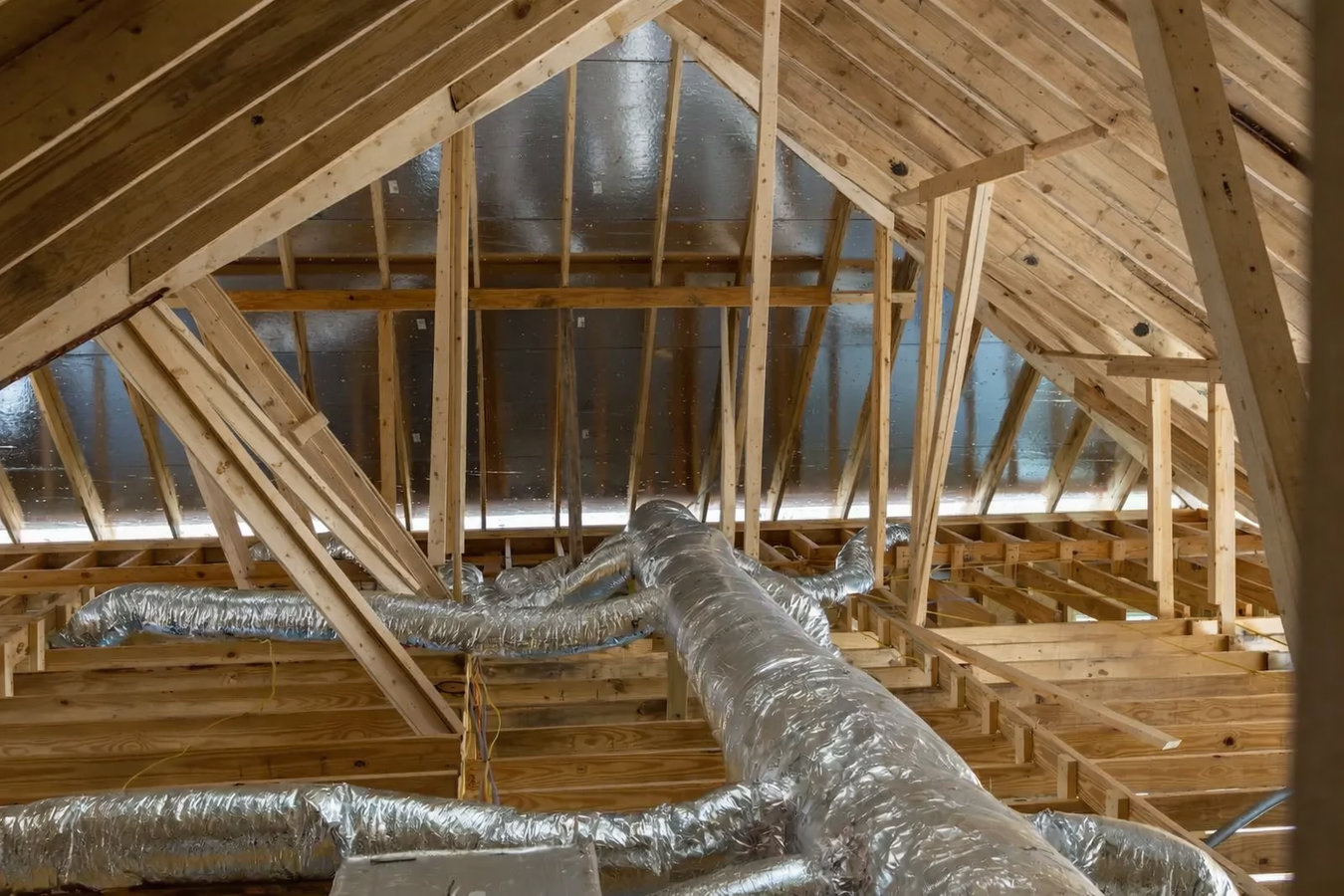
Your attic floor is where most conditioned air escapes and outdoor air sneaks in. Proper air sealing stops that - cutting energy bills, reducing dust, and making every room more comfortable year-round.
Attic air sealing in Kennewick means finding and plugging the gaps in your attic floor where conditioned air escapes and outside air sneaks in - most jobs take between two and six hours and leave your living space completely undisturbed. Unlike adding insulation, which slows heat transfer through materials, air sealing stops air from moving through gaps entirely. Sealing first and then insulating on top is the correct order - adding insulation over unsealed gaps is like putting a blanket over a window that is cracked open.
Most Kennewick homes built before 2000 were never air-sealed at the attic floor level. Many have had insulation added over the years without anyone addressing the gaps underneath - which means you may have a reasonably insulated attic that is still leaking significant amounts of air. The U.S. Department of Energy estimates that air sealing can save homeowners an average of 15 percent on heating and cooling costs - a meaningful number in Kennewick's demanding climate.
Attic air sealing is closely related to crawl space vapor barrier work - both address the boundaries of your home's thermal envelope, one above and one below. Many homeowners who schedule attic air sealing find that a crawl space assessment at the same time reveals a similar opportunity for improvement.
If your heating or cooling system runs for long stretches but rooms still feel too hot in summer or too cold in winter, air is escaping faster than your system can compensate. In Kennewick's climate, where summer heat is intense and winters are genuinely cold, this is one of the clearest signs that your attic floor is leaking conditioned air. A well-sealed attic helps your system reach and hold the temperature you set.
Kennewick's Columbia Basin location means wind-driven dust is a real part of life, and homes with leaky attics pull that dusty outdoor air in through ceiling gaps. If you find yourself dusting more than seems reasonable, or if your home feels gritty after a windy day, your attic may be acting as an unintended air intake. Sealing those gaps cuts off the pathway that outdoor air and everything it carries uses to enter your home.
Kennewick's extreme seasonal temperatures mean a leaky attic shows up clearly on your utility bill. If your summer cooling or winter heating bills feel disproportionately high compared to neighbors in similar-sized homes, the attic is one of the first places to investigate. An energy assessment can confirm whether air leakage is the culprit.
Hold your hand near a recessed ceiling light or the edge of your attic access hatch on a cold winter day. If you feel cool air moving, outside air is finding its way in through gaps in the attic floor. These are among the most common and most overlooked leak points in older Kennewick homes, and they are exactly what attic air sealing targets.
We seal the attic floor gaps that cause the most energy loss: tops of interior partition walls, plumbing and electrical penetrations, recessed light fixtures, attic access hatches, and the spaces where framing meets drywall. In Kennewick homes built in the 1970s through 1990s, these gaps are typically numerous and have never been addressed - which is why homes from that era tend to see the most noticeable improvement after the work is done. We work in the attic itself; your living space is not touched during the job.
Where it makes sense, we combine attic air sealing with a review of your broader home performance. We look at eligibility for rebates from Benton PUD and Pacific Power, and we discuss the federal tax credit for qualifying energy efficiency work. For homeowners interested in whole-home air sealing beyond the attic, our air sealing services cover rim joists, basement penetrations, and exterior wall gaps as well. The Building Performance Institute (BPI) provides the certification standards that trained air sealing contractors follow to locate and address the real sources of air loss - not just the obvious ones.
Suits homes where the primary goal is stopping conditioned air from escaping into an unconditioned attic space above the living area.
Suits homes with recessed ceiling lights - common in 1980s and 1990s Kennewick construction - where each fixture is a direct air leak path.
Suits older homes where the tops of interior partition walls were never sealed, creating open channels between the living space and the attic.
Suits homeowners who want to address air sealing and add attic insulation depth in a single visit, which is how most contractors recommend approaching an older attic.
Kennewick's location in the Columbia Basin creates some of the most demanding conditions for a home's thermal envelope in Washington State. Summer temperatures regularly exceed 100 degrees Fahrenheit from June through August, and winter nights routinely drop below 20 degrees - a seasonal swing of more than 80 degrees that puts constant pressure on the boundary between your living space and the attic. The same dry, windy conditions that make the Tri-Cities a challenging climate also mean that every gap in your attic floor is drawing in dusty outdoor air - or losing conditioned air to the outside - nearly every day of the year. Homes in Kennewick built before 2000 were constructed before attic air sealing was a standard practice, and many have had insulation added over the decades without anyone sealing the floor-level gaps that actually drive the air movement.
The wildfire smoke that rolls through eastern Washington most summers adds another reason to take attic air sealing seriously here. Homes with leaky attic floors pull that smoke-laden outdoor air in through ceiling gaps, and the problem is especially noticeable in older construction where the gaps are numerous. Homeowners across Pasco and Richland face the same climate and housing stock conditions - we work across all three Tri-Cities communities and the surrounding region.
We respond within 1 business day. Tell us roughly how old the home is, any comfort problems you have noticed, and whether you have had any insulation work done before. You do not need to know anything technical - just describe what you are experiencing.
A technician goes into your attic to measure what is there, locate obvious gaps, and check for any moisture or ventilation issues. Some jobs include a blower door test - a device that measures exactly how much air is leaking through your home - so you have a before-and-after comparison.
You receive a written estimate covering the work, materials, and total cost. We also confirm whether a permit is required and let you know about any current Benton PUD or Pacific Power rebates your project may qualify for before you commit to anything.
The crew works entirely in the attic - your living space is not disrupted. The job typically takes two to six hours for a standard home. Before leaving, we replace any insulation that was moved and walk you through what was sealed and where.
No pressure, no commitment. We assess your attic, tell you what we find, and show you any Benton PUD or Pacific Power rebates you may qualify for - before you decide anything.
(509) 206-9343With summer highs that regularly exceed 100 degrees Fahrenheit and winter nights that can drop below 10 degrees, Kennewick places real pressure on the attic floor in both directions. We seal that boundary properly so your home holds its temperature instead of fighting the outdoor air all year long.
The Columbia Basin is known for wind-driven dust and increasingly smoky summers. Every gap in your attic floor is a pathway for that outdoor air - and everything it carries - to enter your home through the ceiling. Sealing those gaps is one of the most direct improvements you can make to indoor air quality in this region.
We work in homes across all 12 service communities in our region, including the 1960s-through-1990s housing stock that makes up a large share of Kennewick's neighborhoods and where attic air sealing delivers the largest improvements. That hands-on local experience shapes how we approach every job.
Both Benton PUD and Pacific Power have offered rebates for qualifying attic air sealing work, and the federal tax credit may also apply. We walk through what is currently available at the estimate stage and handle any permit requirements through the City of Kennewick's Building Division so you are not navigating that paperwork alone.
Attic air sealing is a job where the devil is in the details - a contractor who skips moving existing insulation to reach the attic floor is not doing the real work. We do the job correctly the first time, which means working at the floor level where the gaps actually are.
The ENERGY STAR Seal and Insulate program provides homeowners with a clear framework for understanding what proper attic air sealing involves and what performance improvements to expect - it is a useful reference when evaluating what any contractor is proposing to do in your attic.
Below the living space, a crawl space vapor barrier controls ground moisture the same way attic air sealing controls air movement above - both protect your home from opposite ends.
Learn moreWhole-home air sealing services address gaps beyond the attic floor - including rim joists, exterior walls, and basement penetrations - for a complete building envelope upgrade.
Learn moreAttic temperatures in Kennewick can reach 140 degrees Fahrenheit by July - schedule your free estimate in spring and your home will be sealed before the hottest months arrive.