Vapor barrier installation
Vapor barrier installation covers the full scope of ground moisture protection - including assessment, material selection, and correct seam sealing - so every part of your crawl space is protected.
Learn moreServing Kennewick, WA and surrounding areas. (509) 206-9343
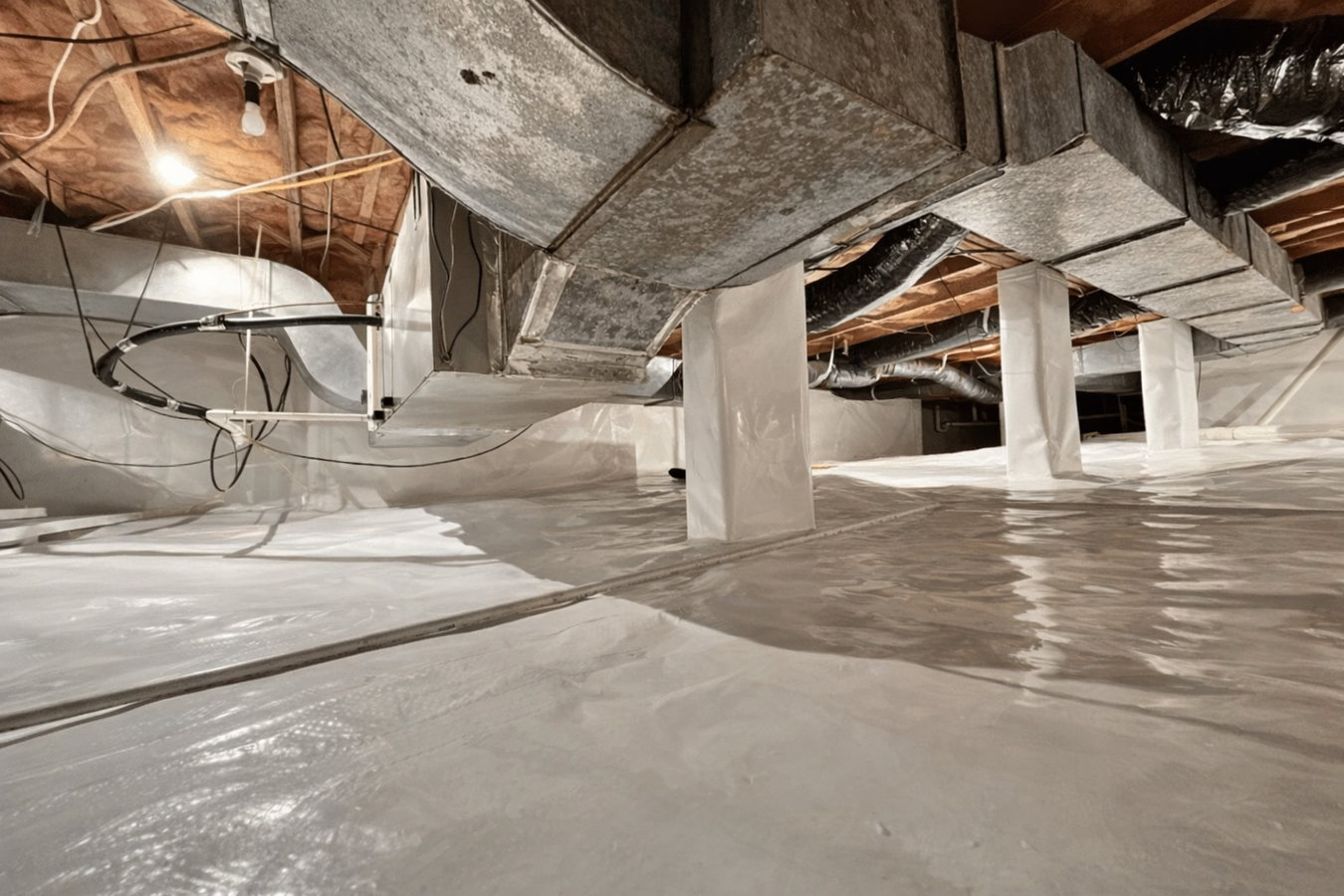
Ground moisture rising through your crawl space causes musty odors, cold floors, and slow wood damage. A properly installed vapor barrier stops it before it reaches your home.
Crawl space vapor barrier installation in Kennewick means laying thick plastic sheeting across the bare dirt floor of your crawl space to block ground moisture from rising into your home - most jobs take one day and the crew works entirely under the house without disrupting your routine. The barrier does one job: it stops moisture from the ground from traveling up into your floor joists, subfloor, and eventually your living space where it causes rot, mold, and higher energy bills.
Kennewick sits in a high desert climate that gets very little rain, but ground moisture is not about rainfall - it rises from the soil itself regardless of what the weather is doing. The Columbia Basin's heavy irrigation network makes this worse by keeping the soil under and around homes much wetter than the dry air suggests, especially from spring through late summer. The U.S. Department of Energy recommends vapor barriers in crawl spaces as a core part of home moisture management, and homes in irrigated areas like the Tri-Cities have particularly strong reasons to have one in place.
For homes where moisture problems go beyond what a ground barrier can handle, a crawl space vapor barrier is often the starting point before upgrading to full vapor barrier installation with wall coverage and encapsulation. A good contractor will assess your specific situation and tell you which approach actually fits your home.
A damp, earthy odor coming from your floors or vents - especially after Kennewick's irrigation season kicks in during spring and summer - is one of the most reliable early warnings that ground moisture is rising through your crawl space. The smell tends to be strongest near floor registers or in rooms directly above the crawl space. It will keep getting worse as long as bare soil is exposed under your home.
When there is no barrier between the ground and your floor joists, cold and moisture travel straight up. If your floors feel noticeably cold even with the heat running, or if any section feels slightly springy or soft underfoot, moisture damage to the subfloor may already be underway. Kennewick winters are cold enough that this problem shows up clearly between November and February.
If you can safely peek through the access hatch and see exposed soil with no plastic sheeting covering the ground, your home has no vapor barrier. This is common in Kennewick homes built before 1980. You do not need a contractor to tell you this - you can check it yourself with a flashlight. Bare soil means decades of moisture working its way into your floor structure with nothing stopping it.
A wet crawl space makes your home harder to heat. Moisture in the air under your floors draws heat away faster, and your furnace has to work harder to compensate. If your energy bills have increased and you have not changed your habits, the crawl space is one of the first places a good contractor will look - especially in Kennewick homes where the original vapor barrier may be decades old or missing entirely.
The right vapor barrier approach depends on what is actually happening under your home. Most Kennewick homeowners need a straightforward ground cover installation with a reinforced plastic liner - the kind that holds up through the region's wide seasonal temperature swings and repeated irrigation cycles without tearing within a few years. Material thickness matters more than most people realize: a 10- to 20-mil reinforced liner outlasts a basic 6-mil sheet significantly, and the difference in upfront cost is small compared to the difference in how long it lasts.
For homes with more serious moisture problems - standing water, visible mold, or crawl spaces near the Columbia River where the water table is higher - a basic ground barrier may need to be paired with wall coverage or a dehumidifier. This is what full encapsulation refers to, and it is distinct from a standard vapor barrier. We also handle partial repairs for homes that have an existing barrier with tears or failed seams. Everything we recommend starts with a look at your actual crawl space - not an assumption about what it probably needs. If you are also dealing with inadequate floor insulation, crawl space insulation addresses heat loss in the same area and is often done at the same time.
Suits most Kennewick homes with typical soil moisture - a 10- to 20-mil reinforced plastic sheet covers the entire crawl space floor and blocks moisture at the source.
Suits homes with higher ground moisture, frequent crawl space access, or crawl spaces near the Columbia River where a thicker, more durable material handles higher moisture pressure.
Suits homes with an existing barrier that has tears or gaps - a contractor can repair seams and replace damaged sections without a full reinstallation when the underlying material is still sound.
Suits homes with visible mold, standing water, or persistent humidity problems where ground cover alone is not enough and full wall sealing with a dehumidifier is the right solution.
Kennewick homeowners often assume a dry climate means no moisture problem under the house. That assumption is wrong in this region. The Columbia Basin's irrigation infrastructure - including the Kennewick Irrigation District, which serves agricultural land across Benton County - keeps the soil under and around homes much wetter than the low rainfall would suggest. Ground moisture rises through the soil by capillary action, the same way a paper towel absorbs water from a wet surface, and it does this year-round regardless of what the sky is doing. Homes in central Kennewick that were built in the 1950s through 1970s frequently have no vapor barrier at all - just bare soil that has been pushing moisture into the floor structure for decades. The Building Science Corporation identifies ground moisture as one of the most common and most overlooked sources of structural damage in homes with unfinished crawl spaces.
Kennewick's seasonal extremes add a second problem: wide temperature swings from summer highs that regularly exceed 100 degrees Fahrenheit to winter nights below freezing cause soil to expand and contract, which stresses older plastic sheeting and opens up gaps in barriers that were installed decades ago. This is why we install reinforced, thick-mil material suited for the local climate rather than the thinnest option that technically meets the standard. We serve homeowners across Richland and West Richland as well - crawl space moisture conditions are consistent across the Tri-Cities area, and the same irrigation-season pressure applies throughout.
We respond within 1 business day. Tell us roughly how old your home is and whether you have noticed any odors, cold floors, or moisture problems. You do not need to know anything technical - just describe what you are experiencing and we will take it from there.
A contractor physically goes under your home and inspects the crawl space before quoting anything. They check size, accessibility, existing moisture, and whether any old material needs to come out first. This visit is free and takes about 30 to 45 minutes.
You receive a written estimate explaining what is being recommended and why - whether that is a basic ground barrier or something more involved. A trustworthy quote will not pressure you to decide on the spot and will explain how seams and edges will be handled.
The crew works entirely in the crawl space - your home is not disrupted. They clear debris, lay the barrier, overlap and seal all seams, and run edges up the foundation walls. Most Kennewick homes are completed in four to eight hours. A walkthrough with photos follows before the crew leaves.
We will come out, look under your home, and give you a straight answer about what it actually needs. Written estimate included. No obligation to book.
(509) 206-9343The Columbia Basin's irrigation network pushes ground moisture under homes year-round, not just in rainy seasons. We install barriers rated for this sustained moisture pressure - not the minimum 6-mil sheet that tears after a couple of seasons - so the protection holds up through Kennewick's irrigation cycles year after year.
We coordinate City of Kennewick permit requirements when needed, so you are not navigating building department paperwork on your own, and we document what was installed. Permitted, documented work protects your home's resale value.
A significant share of Kennewick homes built before 1980 have never had a vapor barrier installed or have original plastic that is long past its useful life. We work in these older crawl spaces regularly - tight clearances, crumbling old plastic, and uneven ground are not surprises to our crew.
We serve all 12 communities in our service area, from Kennewick to Richland, Pasco, West Richland, and beyond. Local presence means faster scheduling and a crew familiar with the soil conditions and housing stock specific to your neighborhood.
Every crawl space we assess gets a physical inspection before we recommend anything - no guessing from the driveway. The combination of local climate knowledge, an experienced crew, and honest assessments is what keeps Kennewick homeowners calling us back for follow-on work and referring their neighbors.
Vapor barrier installation covers the full scope of ground moisture protection - including assessment, material selection, and correct seam sealing - so every part of your crawl space is protected.
Learn moreCrawl space insulation pairs with a vapor barrier to address both moisture and heat loss at the floor level - the two upgrades work best when done together.
Learn moreIrrigation season is coming - book your free crawl space assessment now and stop ground moisture before it does another season of damage.