Open-cell foam insulation
Where budget per square foot matters more than maximum R-value per inch, open-cell foam is a flexible alternative suited to interior walls and some attic applications.
Learn moreServing Kennewick, WA and surrounding areas. (509) 206-9343
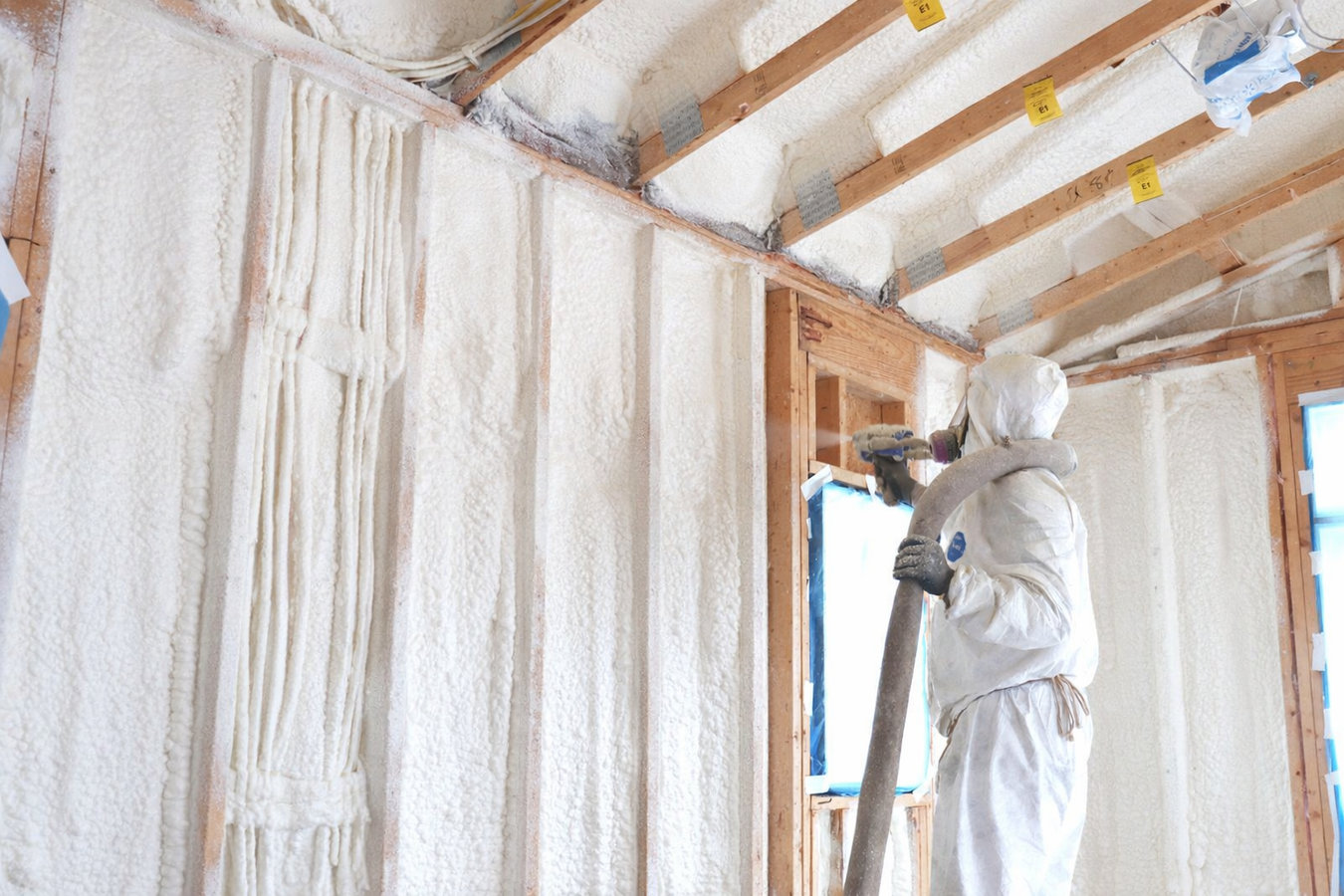
Closed-cell spray foam insulates and air-seals in a single application - the highest R-value per inch available, with a built-in moisture barrier. Built for Kennewick's extreme summers, cold winters, and persistent wind.
Closed-cell foam insulation in Kennewick is a two-part liquid sprayed directly onto walls, floors, or ceilings where it expands and hardens into a firm, dense layer - most single-area jobs like a crawl space or attic are complete in a few hours. Unlike fiberglass batts that only slow heat transfer, closed-cell foam delivers the highest R-value per inch of any common insulation material while also sealing air leaks in the same application. It bonds tightly to framing, stays in place indefinitely, and acts as a moisture barrier.
In Kennewick, this combination matters more than in calmer climates. The Columbia Basin is one of the windiest regions in Washington, and that wind-driven air infiltration - cold air pushing in through gaps in winter, 100-degree air in summer - is a major comfort and efficiency problem that standard batts do not address. The U.S. Department of Energy notes that closed-cell foam delivers roughly twice the insulating power per inch compared to standard fiberglass batts - which matters a lot in spaces with limited depth like rim joists and crawl space walls.
Closed-cell foam is commonly paired with open-cell foam insulation in homes where different areas have different performance requirements - closed-cell in the crawl space and rim joist, open-cell in interior walls or the attic. We walk through both options during the estimate so you are not guessing which is right for your specific situation.
Kennewick summers regularly bring triple-digit heat from June through August. If your cooling bills feel out of proportion to your home's size or how you use the thermostat, poor insulation is often the culprit. When your home cannot hold conditioned air, your system runs almost constantly - and you feel it in your wallet every month.
If you walk across your living room in January and the floor feels noticeably cold through your socks, your crawl space is likely losing heat to the ground. Kennewick winters are cold enough that an uninsulated or poorly insulated crawl space acts like a refrigerator under your feet. This is one of the most common complaints from homeowners in older Kennewick neighborhoods.
Hold your hand near an electrical outlet on an exterior wall on a cold or windy day. If you feel a draft, air is moving through your wall cavity. Kennewick's persistent Columbia Basin winds make this problem worse than in calmer climates - gaps that might be minor elsewhere become real comfort issues when the wind is gusting.
If you have ever looked into your crawl space and seen wet insulation hanging down, condensation on surfaces, or smelled something musty coming up through the floor, your crawl space is not properly sealed. In Kennewick's climate, temperature differentials and ground moisture - not rainfall - are the typical causes. The result is the same: a damp space that affects your whole home.
We apply closed-cell foam in the areas where it makes the biggest difference: crawl spaces, basement rim joists, exterior wall cavities, and attic roof decks. In Kennewick's older housing stock - most of which was built when energy codes were far less demanding - these are typically the zones with the biggest performance gap. Crawl spaces are a particular priority here, because many Kennewick homes have vented crawl spaces that were standard decades ago but are now understood to create significant moisture and energy problems in this region. We seal the crawl space perimeter walls with closed-cell foam and, where needed, add a vapor barrier across the ground for full encapsulation.
For whole-home projects, we pair closed-cell work with spray foam insulation planning to match the right product to each area of the home. We also review eligibility for federal energy efficiency tax credits through the ENERGY STAR program during the estimate, and for qualifying work we provide the documentation your tax preparer needs.
Best for Kennewick homes with vented crawl spaces - seals the perimeter, controls moisture, and stops cold-floor complaints.
Targets the leakiest spot in most older foundations - a thin layer of closed-cell foam here yields significant energy savings.
Right for walls that were never properly insulated or where fiberglass has settled and lost performance over decades.
Creates a conditioned attic space that keeps HVAC ducts inside the thermal envelope - effective for homes with ductwork in the attic.
Kennewick sits in the Tri-Cities area of southeastern Washington, where summer highs regularly push past 100 degrees and winter nights can drop below 20 degrees. That is an 80-plus degree swing your home's envelope has to manage. Homes with inadequate insulation in this climate do not just feel uncomfortable - they run heating and cooling systems hard enough to significantly shorten equipment life and drive up utility bills year-round. Much of Kennewick's residential development happened in the 1970s through 1990s, when insulation standards were far lower than they are today. Many of those homes have fiberglass batts in the walls that have settled, compressed, or were never installed correctly - which is why homeowners in older Kennewick neighborhoods often find that upgrading to closed-cell foam in the crawl space or rim joist area produces noticeable results quickly.
Homeowners across the Tri-Cities deal with the same conditions. We work regularly in West Richland and Walla Walla, where the same 1970s-to-1990s housing stock and the same Columbia Basin climate create identical insulation challenges. The Spray Polyurethane Foam Alliance provides homeowner resources on what to expect from a properly installed spray foam job.
We respond within 1 business day. Let us know which area of your home you are concerned about, any comfort problems you have noticed, and roughly when the home was built. No commitment required at this stage.
We walk through your crawl space, attic, rim joist, or walls - wherever you want insulated - check for moisture or structural issues, and give you a written quote that specifies what will be done and what it will cost. You see the number before anyone picks up a spray gun.
We handle the building permit for your project before work begins. You will need to clear the work area and arrange to be out of the home - with your pets - for about 24 hours after spraying. Your contractor will walk you through exactly what to prepare.
The crew applies foam in passes - it expands and hardens within seconds. Most single-area jobs like a crawl space or attic are finished in a few hours. When the foam has fully cured and you are back in the home, we do a final walkthrough and coordinate any required inspection.
No obligation. We will walk through your crawl space, attic, or walls and give you a written quote that covers scope, cost, and any federal tax credits that may apply.
(509) 206-9343With winter lows below 20 degrees Fahrenheit and summer highs that regularly exceed 100 degrees, Kennewick demands insulation that performs across the full range. Closed-cell foam maintains its R-value in both extremes - something that compressed fiberglass batts in older homes do not.
Sustained winds of 15 to 25 mph are routine in Kennewick, and gusts regularly exceed 40 mph. Closed-cell foam expands to fill every gap and bonds tightly to framing - creating an air barrier that holds up under that pressure. It does the job that caulk alone cannot.
We pull the required building permit before every project and coordinate with Kennewick's building department for any required inspection. When you sell your home, you have paperwork proving the work was done to code - not just a verbal assurance that it was.
We have worked in homes across all 12 service areas in our region, including the 1970s-to-1990s housing stock that makes up the majority of Kennewick's neighborhoods. That hands-on local experience shapes how we scope and install every closed-cell foam project.
Spray foam quality depends almost entirely on the contractor who installs it - the ratio of chemicals, the application temperature, and the prep work all matter. We do this work to a standard that holds up under Kennewick's conditions, not just on the day of installation.
Where budget per square foot matters more than maximum R-value per inch, open-cell foam is a flexible alternative suited to interior walls and some attic applications.
Learn moreAn overview of both closed-cell and open-cell spray foam options and how each fits different areas of a Kennewick home.
Learn moreClosed-cell foam is most effective when installed before the season's peak. Call now to schedule your free estimate and get on the calendar.