Attic air sealing
Pair open-cell foam with dedicated attic air sealing to target the gap-filled attic floor where most conditioned air escapes.
Learn moreServing Kennewick, WA and surrounding areas. (509) 206-9343
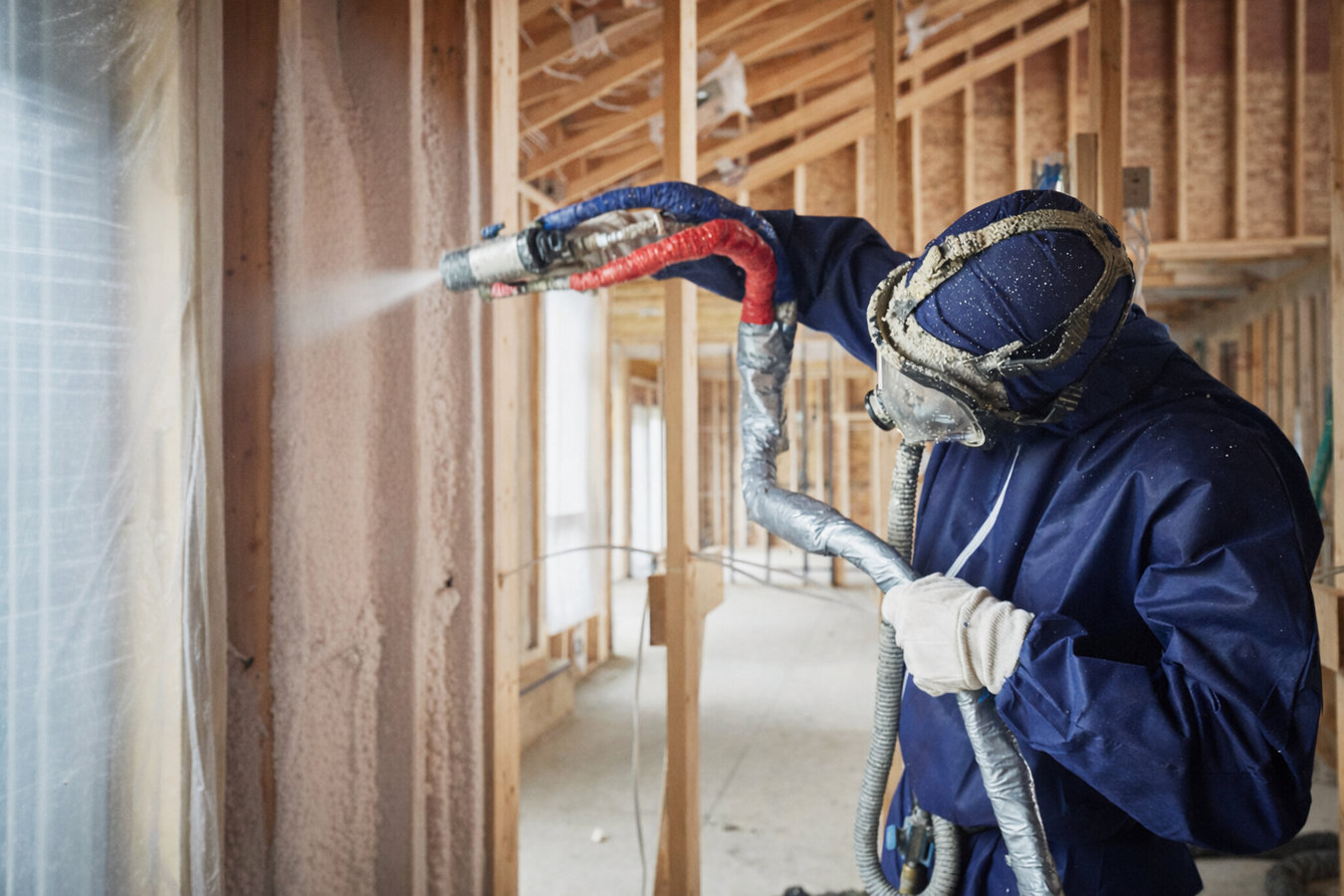
Soft, expanding open-cell foam insulates and seals drafts in a single visit. A cost-effective upgrade for Kennewick attics, walls, and crawl spaces that keeps summer heat out and winter warmth in.
Open-cell foam insulation in Kennewick is a soft, expanding material sprayed as a liquid that fills gaps and bonds to surfaces - most residential attic or crawl space jobs are complete in one to four hours. Unlike fiberglass batts that only slow heat transfer, open-cell foam seals air leaks and insulates in the same application, creating a seamless layer with no cold spots or hidden gaps. The result is a home that holds its temperature better during Kennewick's demanding summers and cold winters.
A lot of Kennewick homes were built in the 1960s through 1980s, when insulation requirements were far less demanding than they are today. Many of those homes have original attic insulation that has settled and compressed, losing much of its effectiveness. Open-cell foam can be applied over existing insulation in many cases, or it can replace it entirely. The U.S. Department of Energy estimates that homeowners can save up to 15 percent on heating and cooling costs by air sealing and insulating - and open-cell foam does both at once.
If your project involves areas where maximum R-value per inch matters most - like a crawl space or rim joist - it is worth comparing open-cell to attic air sealing or closed-cell foam. We walk through both options during the free estimate so you understand what fits your specific home before any decision is made.
If your air conditioner runs for hours on a hot Kennewick summer day but certain rooms still feel stuffy, hot air is getting in faster than your system can push it out. The most common culprit is air leaking through gaps in the attic, around recessed lights, or along the top of exterior walls. Open-cell foam seals those entry points so your cooling system can actually keep up.
If you can smell wildfire smoke inside your home even with windows closed, your home has meaningful air leaks. Smoke particles are tiny, and if they are getting in, so is hot summer and cold winter air all year long. In Kennewick, where smoky summers are increasingly common, this is a problem that insulation and air sealing can directly address.
Rising energy bills without a change in your habits or utility rates often point to insulation that has settled, compressed, or degraded. In older Kennewick homes built in the 1960s and 1970s, original attic insulation may have lost much of its effectiveness after decades of temperature swings. If your bills feel out of proportion to the size of your home, an insulation assessment is a reasonable next step.
Hold your hand near an electrical outlet on an exterior wall on a cold winter day - if you feel cool air, that wall cavity is connected to the outside. The same thing happens at the tops of walls where they meet the attic, a spot that is nearly impossible to seal with traditional insulation. These are exactly the kinds of gaps that open-cell foam fills completely.
We install open-cell foam in attics, interior walls, rim joists, and vented crawl spaces across Kennewick and the surrounding Tri-Cities area. For attic applications, open-cell foam is especially effective because it expands to fill the irregular shapes created by framing, pipes, and wiring - the exact spots that traditional batts never fully cover. In a climate like Kennewick's, where wildfire smoke and Columbia Basin dust can infiltrate through those same gaps, sealing them properly is both a comfort and air quality improvement.
For whole-home projects, we pair open-cell work with a review of your broader insulation strategy. Interior walls often suit open-cell foam for sound control and thermal separation between rooms, while spaces with limited depth or moisture concerns may be better served by closed-cell. We also review eligibility for utility rebates through Benton PUD and Pacific Power, and we discuss the federal tax credit for qualifying energy efficiency work through the ENERGY STAR program. If spray foam insulation is part of your plan, we can help determine which type - open-cell or closed-cell - fits each area of your home.
Suits homes with accessible attic space where both air sealing and insulation are needed in a single visit.
Suits renovation projects where walls are open and a cost-effective sound and thermal barrier is the priority.
Suits vented crawl spaces in Kennewick's dry climate where moisture is less of a concern than air infiltration.
Suits homes where cold floors in winter point to uninsulated framing gaps at the foundation perimeter.
Kennewick sits in the Columbia Basin - a high desert environment where summer temperatures regularly exceed 100 degrees Fahrenheit and winter nights can drop into the 20s. That swing of more than 70 degrees means your home's insulation is under pressure in both directions, all year long. A large share of Kennewick's housing stock was built between the 1960s and 1990s under energy codes that required far less performance than current standards. Those homes were never air-sealed at the attic floor or wall top level, and open-cell foam is one of the most practical ways to close that gap without a full renovation. The dry, windy conditions in the Tri-Cities also make air infiltration a bigger comfort problem here than in calmer parts of Washington - wind-driven air finds every gap in the building envelope, and open-cell foam seals those gaps permanently.
Wildfire smoke is an increasingly common concern across eastern Washington, and Kennewick homeowners who have noticed smoke smell indoors during fire season are dealing with a direct air infiltration problem that better insulation and sealing can address. Homeowners in Richland and West Richland face the same climate conditions and often have similar housing stock from the same era - we work across all three Tri-Cities communities and understand what these homes typically need.
We respond within 1 business day. Tell us which area of your home you want insulated and roughly when the home was built. No commitment is required at this stage - just a conversation.
We visit your home, measure the space, check existing insulation, and look for any conditions that might affect the job. You receive a written quote that specifies what will be done and what it will cost before any work is scheduled.
We confirm whether your project requires a permit and handle the paperwork. You clear the work area and plan to be out of the sprayed space for a few hours after the crew finishes while the foam cures.
The crew sprays the foam in passes - it expands and sets quickly, and most single-area jobs are done in a few hours. We do a final walkthrough before leaving so you can see the completed coverage and ask any questions.
No pressure, no commitment. We measure your space, explain what we find, and give you a written quote before any work is scheduled.
(509) 206-9343When outdoor temperatures climb past 100 degrees Fahrenheit in July and August, air leaks become a direct comfort problem - not just an efficiency one. Open-cell foam seals those leaks at the source, giving your cooling system a fighting chance against the Columbia Basin's most demanding months.
Kennewick experiences smoky air conditions most summers as wildfires burn across eastern Washington and neighboring states. Open-cell foam's air-sealing properties reduce the amount of outdoor air - and the particles it carries - that infiltrates your home through gaps. It is one of the most practical improvements for indoor air quality in this region.
We work in homes across all 12 communities in our service area, including the 1960s-to-1980s housing stock that makes up a large share of Kennewick's neighborhoods and where open-cell foam delivers the biggest improvement from a low baseline. That hands-on local experience shapes how we approach every job.
Every job starts with a written estimate that specifies the work, the materials, and the total cost. You see the number before we pick up a spray gun. If a permit is required for your project, we handle the application and coordinate any required inspection through the City of Kennewick's Building Division.
Open-cell foam is a material where installation quality is visible - you can see whether coverage is even and complete before the crew leaves your driveway. That is the standard we hold ourselves to on every job, and it is why we walk through the finished area with you before packing up.
The Spray Polyurethane Foam Alliance (SPFA) provides installation standards and contractor training resources that inform how properly applied open-cell foam should look and perform - consistent thickness, full coverage, and tight adhesion to every surface.
Pair open-cell foam with dedicated attic air sealing to target the gap-filled attic floor where most conditioned air escapes.
Learn moreSee how open-cell and closed-cell spray foam compare, and understand which product fits each area of your Kennewick home.
Learn moreOpen-cell foam jobs are typically completed in a single visit - call today to schedule your free estimate before our summer schedule fills up.